
From Paganism to Christianity: The Symbolism of Decorated Eggs
Разрисо́вка яи́ц [Egg decorating] is a традицио́нное иску́сство [traditional art] found throughout Восто́чная и Це́нтральная Евро́па [Eastern and Central Europe] as well as Евра́зия [Eurasia], and it предше́ствует [predates] the adoption of христиа́нство [Christianity]. This ancient practice began when the people of this region were язы́чники [Pagans], and the традицио́нные орнаме́нты [traditional designs] carried язы́ческие зна́чения [Pagan meanings], which were later переосмы́слены [reinterpreted] through the lens of Christianity.
В дохристиа́нские времена́ [in pre-Christian times], the яйцо́ [egg] was a символ возрожде́ния [symbol of rebirth] representing the Earth’s renewal веснóй [in spring]. The egg had many symbols related to Pagan поклонéние со́лнцу [sun worship]. With the spread of христиа́нство [Christianity], the пасха́льное яйцо́ [Easter egg] became a representation of воскресе́ние Христа́ [Christ’s resurrection], blending ancient beliefs with new religious traditions (crees.ku.edu).
My Easter Celebration Memories
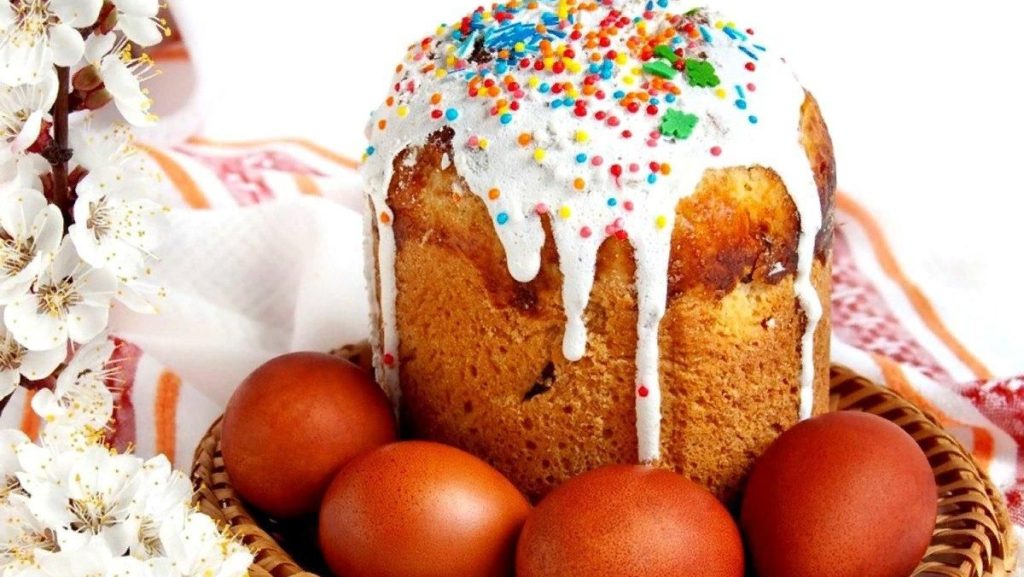
Кра́шение пасха́льных яи́ц [Coloring Easter eggs] is one of my most fun воспомина́ний [memories] of celebrating Па́сха [Easter]. In our family, we used a традицио́нный спо́соб [traditional method] кра́сить [to color] я́йца [eggs] by boiling them в лу́ковой шелухе́ [in onion skins].
A few weeks пе́ред пра́здником [before the holiday], my mother would start collecting лу́ковую шелуху́ [onion skins] so we would have enough for coloring я́йца [the eggs]. The more onion skins you have, the darker the eggs will be! On the day before Па́сха [Easter], we would gather на ку́хне [in the kitchen] to prepare our пасха́льные я́йца [Easter eggs].
How to Dye Eggs with Onion Skins
Чтóбы покра́сить я́йца [to dye eggs] в лу́ковой шелухе́ [with onion skins], вам нужны [you need]:
– сыры́е я́йца [raw eggs]
– лу́ковая шелуха́ [onion skins] (about 1 gallon bag full, but the more, the better!)
– кастрю́ля [a pot] that won’t stain
– вода́ [water]
1️⃣ Положи́те [place] all лу́ковую шелуху́ [onion skins] into a кастрю́лю [pot]. Налéйте [pour] во́ду [water] and доба́вьте [add] одну́ столо́вую ло́жку у́ксуса [one tablespoon of vinegar].
2️⃣ Поста́вьте [place] the pot on the пли́ту [stove], доведи́те до кипе́ния [bring to a boil], then умéньшите [reduce] the heat, накро́йте [cover] the pot, and let the onion skins boil for 30–40 minutes.
3️⃣ When the water becomes dark orange, вы́ключите [turn off] the stove and let the liquid cool.
4️⃣ Процеди́те [strain] the liquid and вы́бросьте [discard] the onion skins.
5️⃣ Положи́те [place] я́йца [the eggs] into the onion skin liquid, доведи́те до кипе́ния [bring to a boil], then умéньшите [reduce] the heat to medium and let the eggs вари́ться [cook] for 10 minutes.
6️⃣ Вы́ключите [turn off] the heat and let the eggs cool in the liquid. Так они́ бу́дут бо́лее я́ркими [this way they will be more colorful].
7️⃣ When the eggs and the liquid cooled down, вы́тащите [remove] the eggs ло́жкой [with a spoon]. Не клади́те [do not place] them on кухо́нное полоте́нце [a kitchen towel], as it may stain. You can подава́ть их [serve them], игра́ть с ни́ми [play with them], or дари́ть их [give them as gifts]!
Alternatively, you can пропусти́ть [skip] steps 3️⃣ and 4️⃣ and положи́ть [place] the eggs directly into the hot mixture with the onion skins. Убеди́тесь [make sure] the eggs are комна́тной температу́ры [room temperature], then follow steps 5️⃣–7️⃣. This way лу́ковая шелуха́ [onion skins] can leave краси́вые узо́ры [beautiful patterns] on eggs!
💡 Подскáзка [Tip]: You can reuse the onion skin dye if you want to color more eggs later.
Slavic Easter Egg Cracking Game
After я́йца [the eggs] were colored, my brother and I would each choose яйцо́ [an egg] and play a traditional Russian Easter game. In America, де́ти [children] go Easter egg hunting. In Belarus, де́ти [children] play «бои́ яи́ц» [“egg battles”]!
One of us would hold an Easter egg, while the other tried to crack it with their own. Наприме́р [for example], I would hold своё яйцо́ [my egg] firmly, while my brother would try to crack its tip using своё яйцо́ [his egg]. Whoever cracked яйцо́ [the egg] побежда́ет [wins]! If ва́ше яйцо́ [your egg] cracks, you choose another one, and игра́ [the game] continues пока́ [until] all the eggs are cracked!
In our райо́н [neighborhood], де́ти [children] would bring their пасха́льные я́йца [Easter eggs] outside and соревнова́ться [compete] to see who had the strongest яйцо́ [egg]. By the end of воскресе́нья [Sunday], our yard was covered in colorful egg shells!
Happy Easter Egg Cracking!
Pisanki: The Tradition of Decorated Eggs in Slavic Countries

The tradition of decorating eggs, known as писанка [pysanka] in Ukrainian, пíсанка [pisanka] in Belarusian, and pisanka in Polish, originates from the verb писа́ть [to write] in Russian, піса́ць in Belarusian, писа́ти in Ukrainian, and pisać in Polish. These words share a common Proto-Slavic root pьsati, meaning “to inscribe” or “to write,” reflecting the intricate, symbolic patterns traditionally drawn on the eggs.
While пи́санки [pysanky] are most commonly associated with Ukraine, similar traditions exist in сосе́дние стра́ны [neighboring countries] such as Belarus, Poland, and Russia. In Poland, например [for instance], the term pisanka encompasses various egg-decorating methods, including kraszanki (also known as malowanki or byczki), where яйца [eggs] are dyed using natural substances like луковая шелухá [onion skins] to achieve rich, earthy tones (philately.lately).
In Belarus, традицио́нные пи́санки [traditional pisanki] are adorned with сло́жные узо́ры [intricate patterns] using traditional techniques, such as салома́нае інкрустава́нне[straw incrustation], a technique that has been passed down из поколе́ния в поколе́ние [passed down from generation to generation].
These beautifully decorated eggs, once part of язы́ческие весе́нние обря́ды [pagan spring rituals] symbolizing обновле́ние приро́ды [the renewal of nature], remain an important part of пасха́льные торже́ства [Easter celebrations] across Slavic cultures.