What’s in a Name? A Philosophical Question in Language and Culture
William Shakespeare’s famous филосо́фский вопро́с [philosophical question] — “What’s in a name?” — suggests that a name is merely an arbitrary label. Одна́ко [however], had the English poet spoken Russian, he might have discovered that и́мя [a name] can reveal far more than мы ожида́ем [we expect]. Hidden inside a simple phrase like «Меня́ зову́т» lies an entire cultural perspective on иденти́чность [identity].
How to say “my name is” in Russian
This cultural взгляд [perspective] quietly reveals itself when students learn how to say “my name is” in Russian:
«Меня́ зову́т…»
Did you know that э́та фра́за [this phrase] does not буква́льно [literally] mean “My name is…”?
Word for word, «Меня́ зову́т» translates as “Me (they) call” or “They call me…” The subject “they” is implied grammatically, even though it is not spoken вслух [aloud]. And hidden inside this simple beginner phrase is an interesting cultural представле́ние об иденти́чности [conception of identity].
What Does «Меня́ зову́т» Literally Mean in Russian?
In English, the phrase “My name is…” emphasizes the individual speaker — the person who declares or possesses a name. Russian, however, shifts фóкус [the emphasis/focus] toward the social world around the speaker: a name is something used by other people when they address you. In this sense, language reflects the importance of community and челове́ческих отноше́ний [human relationships] in shaping identity. After all, a name exists to be spoken, recognized, and remembered by others.
How to Ask “What Is Your Name?” in Russian
The question Russian speakers ask reflects ту же́ иде́ю [the same idea]. Instead of asking “What is your name?”, мы спра́шиваем [we ask]:
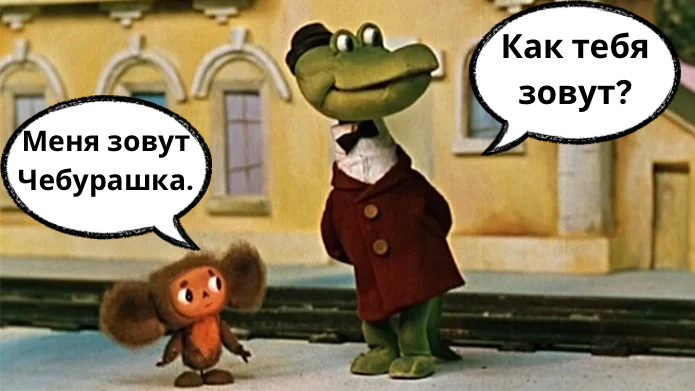
«Как тебя́ зову́т?» — “How do (they) call you?”
Or formally:
«Как Вас зову́т?» — “How do (they) call you?”
Here you can already learn several useful Russian words:
- как — how
- тебя́ — you, Accusative form, informal/singular
- вас — you, Accusative form, formal/plural
- зову́т — (they) call
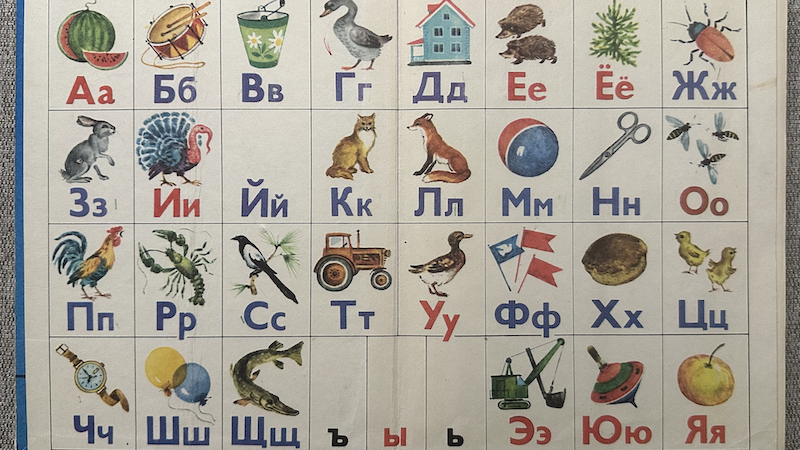
If you’re still learning to read Russian, you might also find my guide to the Russian alphabet helpful.
Russian Grammar Explained: Indefinite-Personal Sentences
Russian often omits the subject, especially in неопределённо-личных предложе́ниях [indefinite-personal sentences], where the verb implies an unspecified “they.” This can sound unusual to English speakers at first, but gradually becomes natural.
Learning Russian Through Everyday Speech and Culture
Russian learners are often уди́влены [surprised] at how expressive or philosophical повседне́вная речь [everyday speech] can be in a new language. It is these ма́ленькие откры́тия [small discoveries], or linguistic excavations, revealing different ми́ровоззре́ния [worldviews], that make learning another language so enjoyable.
Why “What’s in a Name?” Has a Different Meaning in Russian
So возмо́жно [perhaps], the question “What’s in a name?” is not тако́й просто́й [so simple] after all. In Russian, even a basic phrase like «Меня́ зову́т…» reminds us that a name lives between the individual and the people around them — spoken, shared, and recognized в обще́нии [in interaction / communication].
Practice Russian: Watch the Lesson on «Меня́ зову́т»
If you’d like to practice this phrase, you can посмо́треть [watch] my short video. In it, I use famous геро́ев мульфи́льмов [cartoon characters] to help you remember the question and use it in different contexts.